



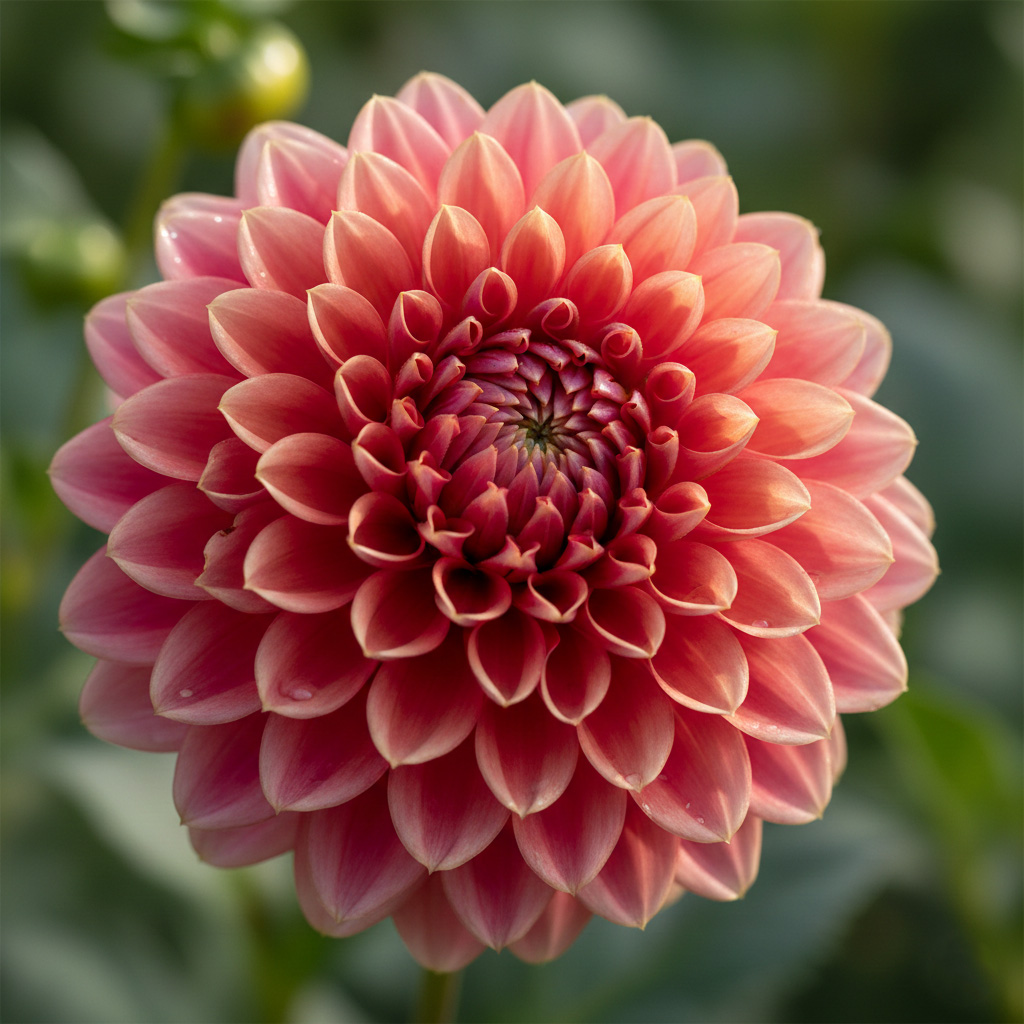
The dahlia is a striking flowering plant known for its wide range of colors, intricate petal forms, and impressive bloom size. Native to Mexico and Central America, dahlias belong to the Asteraceae family and have become popular ornamental plants worldwide. They are highly valued in gardens and floral arrangements because of their bold appearance, long flowering season, and ability to stand out as focal plants in landscapes.
Dahlias thrive in well-drained, fertile soil and require full sunlight to produce healthy growth and abundant flowers. They grow from tubers, which are typically planted in spring after the risk of frost has passed. Regular watering, balanced fertilization, and proper spacing are essential to support strong stems and vibrant blooms. Taller varieties often require staking to prevent damage from wind or heavy flowers.
One of the most notable features of dahlias is their diversity. Flowers range from small pompon types to large dinner-plate varieties, with forms that include single, cactus, decorative, and ball shapes. Colors vary widely, including shades of red, pink, yellow, orange, purple, and white, often with bi-color or gradient patterns. This versatility makes dahlias suitable for both formal gardens and natural-style plantings.
Beyond their visual appeal, dahlias also have cultural and historical significance. They were once cultivated by the Aztecs for food and medicinal purposes before gaining recognition as ornamental plants in Europe during the 18th century. Today, dahlias symbolize elegance, inner strength, and creativity, making them a meaningful choice for gardens, events, and floral designs.