


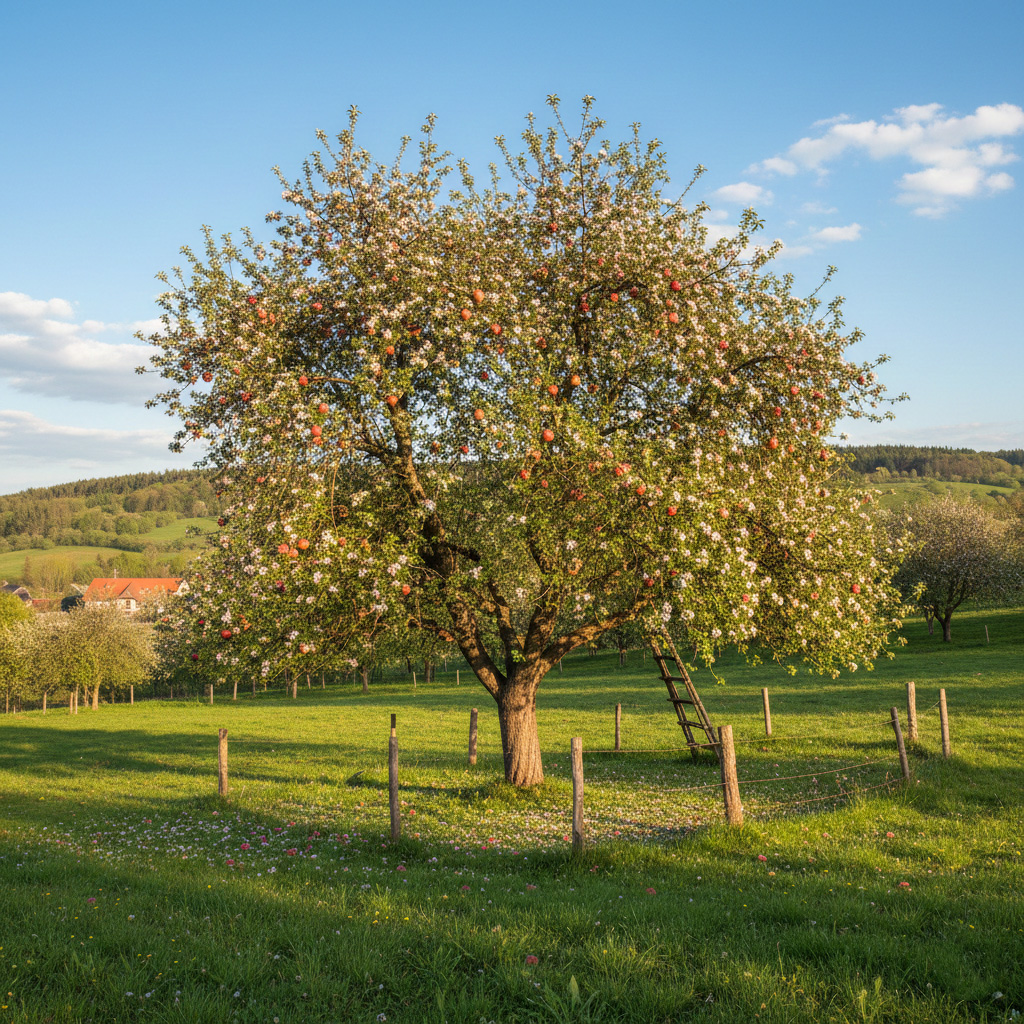
Growing apples successfully requires proper planning, suitable varieties, and consistent care. Apple trees grow best in temperate climates with clear seasonal changes, but they can also be cultivated in some subtropical areas using low-chill varieties. Choose a sunny location that receives at least six to eight hours of direct sunlight daily. Well-drained, fertile soil with a slightly acidic pH is ideal. Before planting, prepare the soil by adding organic matter such as compost to improve structure and nutrient availability.
Apple trees can be grown from seedlings or grafted saplings, with grafted trees being preferred for predictable fruit quality and earlier production. Plant the tree during the dormant season, spacing it adequately to allow good air circulation and canopy development. Water the tree regularly, especially during the first few years, to help establish strong roots. Mulching around the base helps retain moisture, regulate soil temperature, and reduce weed competition.
Proper pruning and training are essential for healthy growth and high yields. Prune apple trees annually to remove dead or diseased branches, shape the tree, and allow sunlight to reach the inner canopy. Fertilize according to soil needs, focusing on balanced nutrients to support growth and fruiting. Monitor for common pests and diseases, such as aphids or apple scab, and apply integrated pest management practices when necessary. With patience and consistent care, apple trees can produce high-quality fruit for many years.